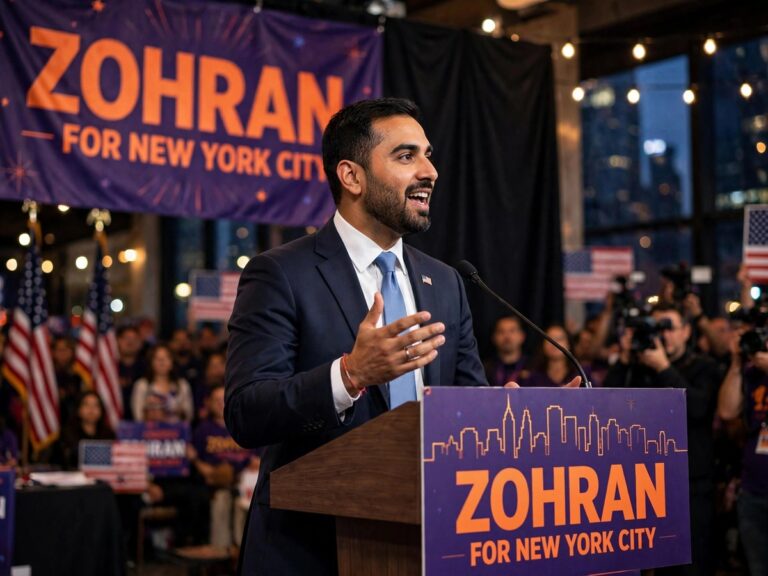

Mayor Zohran Mamdani dismissed concerns about vacant rent-stabilized apartments, then faced a wave of pushback after a New York Times DealBook Summit interview.
Andrew Ross Sorkin, a financial columnist for the Times, asked about thousands of units listed as off the market. The issue matters because some of those apartments could potentially return to use if owners repaired them, adding supply for New Yorkers searching for housing and possibly easing prices.
Landlords argue that the current rules can make that repair work a losing proposition. If an owner cannot charge market rent after spending heavily to bring an apartment up to code, recovering the investment becomes difficult.
Then the Interview Question Followed Him Online
After the discussion, Mamdani posted about the exchange on his account. He asked whether a landlord had written Sorkin’s question and rejected the idea that a large number of rent-stabilized apartments are sitting empty because owners cannot raise rents. He also labeled that claim dangerous.
Mamdani pointed to 6,000 units listed as vacant for five years. But that response created its own question: why use a five-year cutoff, and what about apartments that became vacant more recently? The issue was not whether every vacant unit had the same cause. It was whether the city could dismiss a broader supply problem by highlighting one narrower slice of the data.
People responding to the post pushed back, saying the vacancy concern was not simply a rumor. That reaction made the exchange about more than one interview question. It became a public argument over whether city policy is keeping potential housing off the market.
Did a landlord write this question?
There’s a rumor that a huge number of rent-stabilized apartments are vacant because landlords can’t raise the rent.
That’s not true. And it’s dangerous. pic.twitter.com/ehFEnRuqer
— Mayor Zohran Kwame Mamdani (@NYCMayor) November 22, 2026
The Larger Vacancy Figure Is Harder to Ignore
A report from The Daily Signal, citing City Reporter, said landlords reported about 57,000 vacant rent-stabilized apartments in 2025. The figure represented roughly 5.6 percent of the city’s approximately one million rent-stabilized units. A decade earlier, the citywide vacancy rate was reported at 3.7 percent in 2016.
Those figures do not show that every vacant apartment is being held back because of repair costs. But they do challenge the idea that the concern can be waved away. The report also pointed to New York’s Housing Stability and Tenant Protection Act, passed in 2019, which made it harder to raise rents when expenses climb and harder to recover renovation costs after a tenant leaves.
The repair math is the sticking point. If bringing a unit up to code costs between $50,000 and $100,000, while rent rules limit what can be charged, an owner may have little incentive to spend the money. That does not settle the debate over how many apartments fit that description, but it explains why the landlords’ argument keeps returning to economics.
Why It Matters
This dispute matters because it connects a political argument to a basic housing problem: renters need more apartments they can actually occupy, while owners need a workable path to repair and offer units. The disagreement is not only about whether a particular vacancy figure is described correctly. It is about whether the city’s rules are producing the supply its housing strategy requires. When a unit stays unavailable, renters lose another option, even if the apartment exists on paper.
For landlords, the unresolved issue is whether rent stabilization can protect tenants without making costly repairs financially impossible. For Mamdani, the political risk is different: dismissing the concern may shift attention from the policy’s intended protection to the visible shortage of usable homes. The open questions are concrete. How many reported vacancies are tied to repair costs? How many have appeared more recently than the figure he cited? And what policy would bring those units back without creating a burden the owners cannot absorb? Those questions remain at the center of the dispute.
What the Interview Left Unanswered
Mamdani’s response challenged the framing, but it did not resolve the central question: how can New York bring more rent-stabilized apartments back into use while preserving protections for tenants? Until the city answers both sides of that problem, the vacancy numbers and the repair costs will remain central to the debate.
Source: redstate.com