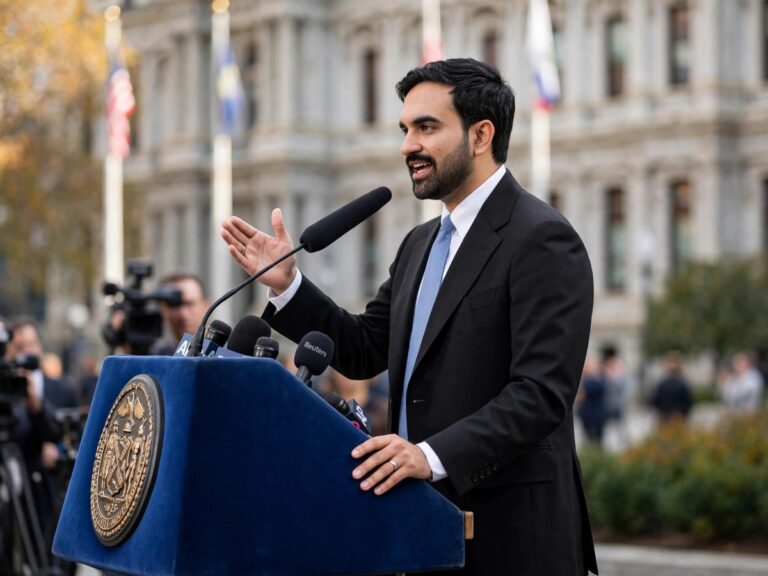
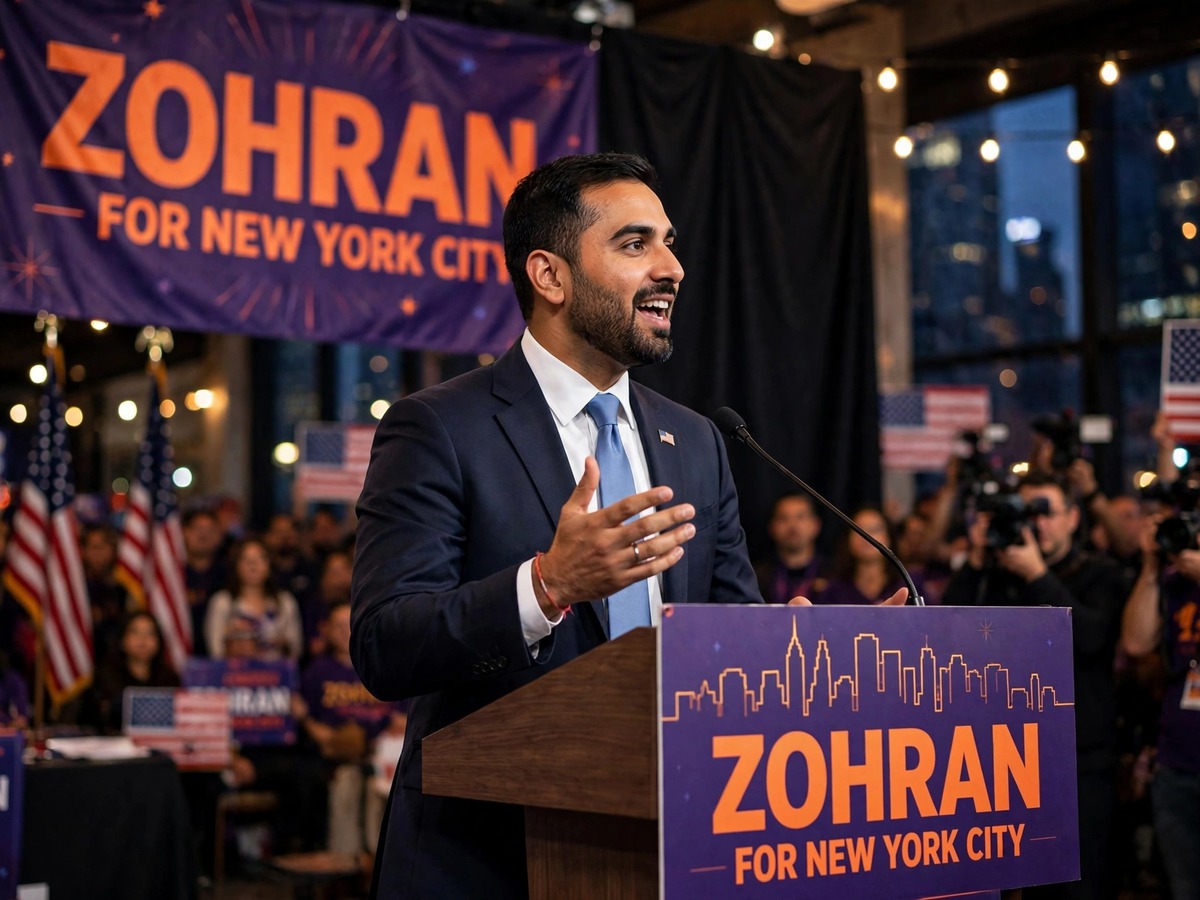
Zohran Mamdani stumbled when Andrew Ross Sorkin asked how his proposed city-run grocery stores could make the numbers work.
At the New York Times DealBook Summit, Sorkin focused on a basic tension: supermarkets often operate on margins of only one to four percent, while Mamdani’s plan calls for discounts of thirty percent on major food items. What would cover the gap, and what would subsidized stores mean for supermarkets competing without the same support?
Mamdani did not answer with a cost breakdown. Instead, he defended the idea as a public necessity. His argument was that government already subsidizes services people consider essential, including the subway, public schools, libraries and sanitation. Since food is required for a dignified life, he said, it belongs in that same category.
In other words, the mayor answered a financial challenge with a political standard: if society decides something is necessary, government can help pay for it. That explains why he believes the proposal is justified, but it does not show how the stores would cover their operating costs or how the subsidy would be structured.
Then Mamdani redirected the pressure toward shoppers. He said Sorkin’s request to “explain the math” echoed what New Yorkers feel when familiar groceries cost far more than they once did. The response placed the focus on household affordability rather than on the missing business calculation.
Zohran Mamdani when asked about subsidizing public grocery stores: “I take a step back, and I think about when society deems something necessary for the public, then we subsidize its creation and its operation. We know that so much of what we rely on from the public sector is not… pic.twitter.com/Oy1SScvVKW
— More Perfect Union (@MorePerfectUS) November 18, 2026
That shift is central to the dispute. Lower prices at the checkout would be visible to shoppers, while the cost of supporting those prices could appear elsewhere, including through higher taxes. The proposal therefore raises two separate questions: whether New Yorkers need relief and whether city-run stores can deliver it without passing the burden to taxpayers or distorting competition.
The exchange also exposed a broader disagreement over government’s role. The criticism contrasts Mamdani’s vision of a government-supported dignified life with a limited-government tradition centered on protecting liberty rather than guaranteeing publicly provided goods. In that framing, a grocery subsidy is not merely a retail experiment. It is another step toward a government expected to supply more of the essentials of daily life.
The report makes a related practical criticism. Publicly supported systems already face complaints about cost, quality and waste, and the article questions why grocery stores operated under the same broad model should automatically perform better. It points to the risk that an appealing promise at the register could become an expensive program with no clear measure of success.
Why It Matters
This matters because the proposal reaches beyond where New Yorkers buy food. It asks residents to choose between two kinds of relief: an immediate discount at the store or a larger public commitment that must be funded and managed. Shoppers could benefit if the plan works, but taxpayers and existing supermarkets would also feel its effects. The financial gap is therefore not a side issue. It is the core test of whether the promise can last.
The argument also reveals how differently the two sides define a basic public duty. Mamdani treats access to food as part of a dignified life and uses that principle to justify public support. The criticism warns that declaring a need essential does not answer questions about efficiency, accountability or who carries the cost. Those questions become more important when government enters a market where private businesses are already operating.
The unresolved issue is simple to state, even if it is difficult to solve: can city-run grocery stores sustain major discounts while avoiding harm to competing supermarkets and remaining affordable for the people funding them? Mamdani explained why he wants the program. Sorkin’s challenge showed that the harder explanation, how the numbers work, was still missing.
Source: Townhall