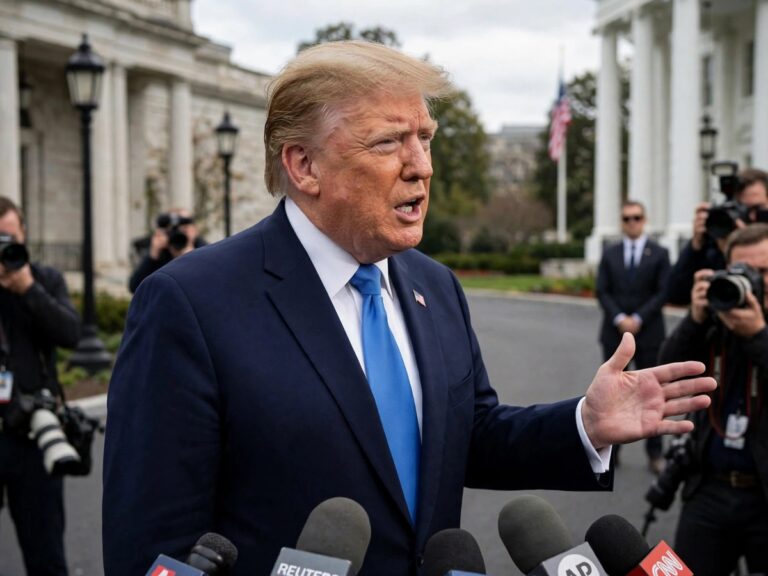
Unverified reports say anti-ship missiles linked to Iran were fired toward U.S. warships in the Gulf of Oman, putting President Donald Trump’s sudden change in tone under immediate scrutiny.
Media supportive of Iran’s Revolutionary Guard claimed that ten missiles were launched toward American ships. The Express reported the vessels had been targeted, but the claim had not been independently verified, and the account found no confirmation from other major outlets.
Explosions were also reported in Sirik, in southern Iran. State-run IRNA said the city had been hit in an enemy attack and described the strike as military, but gave no details about the target, damage, or casualties.
Two Reports, One Dangerous Unknown
The reports leave a central question unanswered: Did Iran fire first, or did U.S. forces strike Sirik before any missile launch? The available information does not establish the order. The article’s author considers an American airstrike the more likely explanation for the blasts, but that remains an opinion rather than verified evidence.
The uncertainty arrived as oil prices rose after Trump said, “we don’t need a deal with Iran.” His administration had pursued an agreement for months, while JD Vance was reportedly expected to travel to the Middle East for more talks. The abrupt shift suggests that something changed behind the diplomatic scenes, though the account does not establish exactly what.
One explanation offered is a rumor that Iran told Qatar it would not negotiate over its nuclear program. Another report claimed that Iran’s Assembly of Experts had apparently decided the country should withdraw from the Nuclear Non-Proliferation Treaty. Neither claim is established here as confirmed, but either would signal a serious setback for diplomacy.
Warnings Point Toward a Wider Conflict
Reports also said the U.S. military had warned Israel to prepare for a possible resumption of fighting with Iran. That came shortly after Trump described renewed attacks as “highly unlikely.” A report from Kan 11 correspondent Itay Blumental said similar security messages were sent to Gulf states.
If bombing resumed, the source says Iran’s nuclear sites, including Pickaxe Mountain, could be targeted. Trump also threatened Iran’s power and oil infrastructure, saying, “If there is no deal we are going to hit each and every one of their electric generating plants very hard and probably simultaneously!”
https://truthsocial.com/@realDonaldTrump/posts/117603621591099598
🚨 جزئیات تازه از پشت پرده پست ترامپ: بر اساس اطلاعاتی که به دست ما رسیده، ایران در ۲۴ ساعت گذشته به قطر اعلام کرده که درباره برنامه هستهای خود مذاکره نخواهد کرد.
قطر این پیام را به طرف آمریکایی منتقل کرد. پس از آنکه پیام به ترامپ رسید، او نوشت که توافق فایدهای ندارد.
— דרור בלאזאדה | Dror Balazada (@DBalazada) November 12, 2026
BREAKING: Iran's Assembly of Experts calls for withdrawal from the Nuclear Non-Proliferation Treaty and a revision of the country's nuclear doctrine, saying it has become "an unavoidable necessity" and "a public and national demand."
"The repeated threats of the aggressor enemy,…
— The Hormuz Letter (@HormuzLetter) November 12, 2026
BREAKING: President Trump sends ULTIMATUM to Iran
"If there is no deal we are going to hit each and every one of their electric generating plants very hard and probably simultaneously!"
"We have not hit their oil, even though that's the easiest target of all, because it would… pic.twitter.com/3NZjttIcLq
— Truth Org (@DTruthsQ) November 12, 2026
Why It Matters
The stakes extend beyond a disputed missile claim. When the order of events is unclear, each side can frame the same reports as proof of aggression by the other. That makes restraint harder and creates pressure for a rapid response before the facts are settled. U.S. personnel, Israeli forces, Gulf states, and civilians in the region could all be affected by decisions based on incomplete information. The warning about possible escalation matters because an exchange involving warships could widen quickly if Israel enters the fighting.
The nuclear dispute adds an additional layer of danger. The story places diplomacy, possible treaty withdrawal, military preparations, and public threats in the same rapidly changing picture, but it does not prove that they are coordinated. The key questions remain who initiated the reported action, whether the warship claim is real, what happened in Sirik, and whether the diplomatic channel can still function. Until those answers are independently established, confident conclusions about the next military move would go beyond the evidence provided.
For now, the account establishes a dangerous overlap of unverified reports, explosions in Sirik, a harder public line from Trump, and warnings that Israel and Gulf states may need to prepare. It does not establish whether Iranian missiles struck or approached U.S. warships, whether American forces hit Sirik first, or what damage resulted. The central claim remains unresolved.
Source: The Liberty Daily