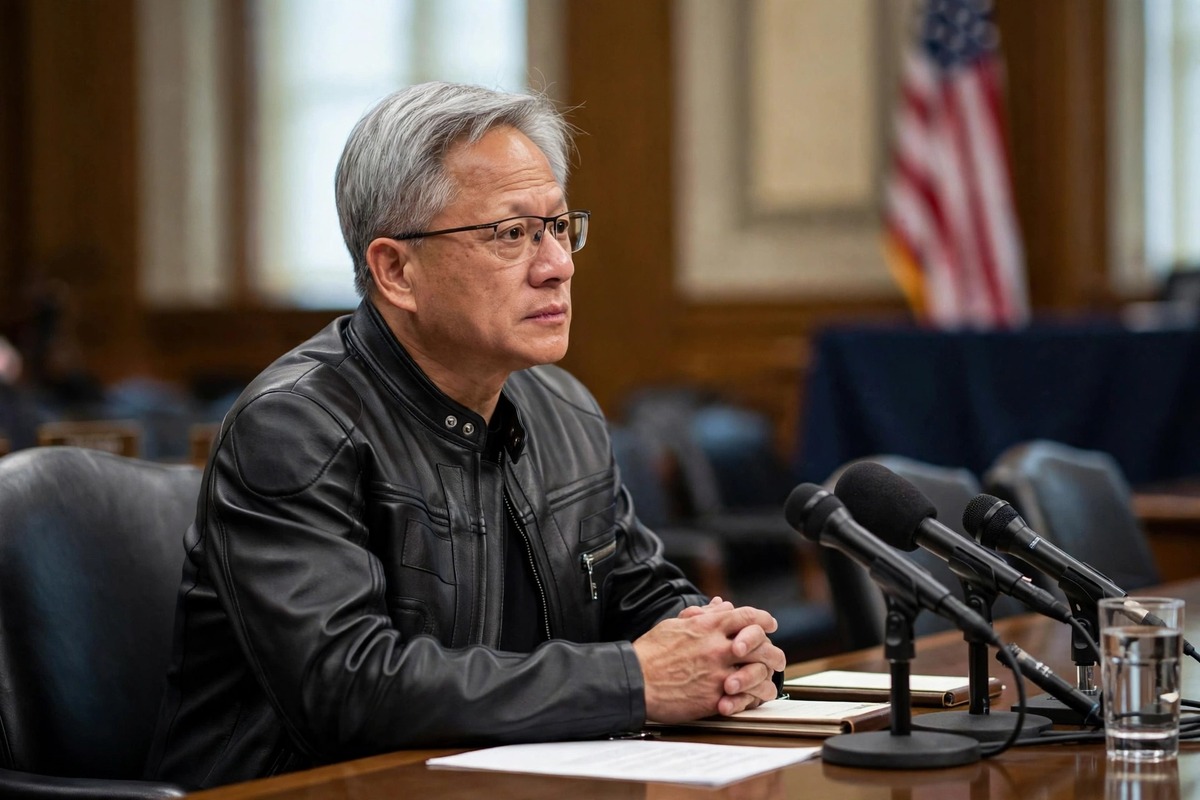
Jensen Huang is being pressed to answer Congress after a report said U.S. intelligence assessed that Alice Huang, a Chinese businesswoman close to him, worked for Beijing’s Ministry of State Security.
The assessment appeared in a memo circulated among senior Trump administration policymakers last spring. According to the report, Alice Huang had been recruited to gather information about the Nvidia chief. The two Huangs are not related. The reported objective went beyond personal access: Beijing wanted insight into America’s artificial-intelligence chip industry and possibly a way to influence Nvidia’s policy on selling advanced products to China.
One earlier report said U.S. agencies had electronically monitored Alice Huang for at least a year. It also said Donald Trump was briefed last year about her relationship with Jensen Huang but did not take action. Those details make the alleged relationship more consequential than a routine customer meeting, which is how Nvidia describes it.
The report says Alice Huang’s business circle included companies and investors around Shanghai and Zhejiang. That network had a financial connection to China’s military establishment through an investment in a cybersecurity arm of China Electronics Technology Group, a major military-technology maker.
A separate part of the case involves Megaspeed. Trade records cited in the reporting show a Malaysian affiliate purchased at least $4.8 billion in advanced AI equipment containing Nvidia technology from June 2024 through February 2026. The Commerce Department inquiry into Megaspeed was sent to the Justice Department this year.
The Ministry of State Security has also become a larger concern in the story. The report describes an agency that received greater attention after Xi Jinping took power in 2012, grew to many times the CIA’s size, and made technology a major focus, according to former CIA counterintelligence analyst Peter Mattis.
Jensen Huang’s public advocacy adds another layer. He has repeatedly argued that U.S. chipmakers should be allowed to sell to China to compete with Huawei and slow China’s own AI development. In 2025, Trump rolled back a prohibition on some AI chip sales, and the administration removed its block on Nvidia’s H20 chip that July. The two later reached a deal for Nvidia to sell its second-most-powerful chip to China while the United States received 25 percent of the sales.
Trump considered allowing China to buy Nvidia’s newest Blackwell chip but later abandoned that idea. At an investor conference in May, Huang said China should not receive Nvidia’s top technology, including Blackwell and the forthcoming Rubin chip. Nvidia spokesman John Rizzo said the company does not provide classified material to customers, and customers do not ask it to lobby Washington over chip rules.
Nvidia also says Huang’s contact with Alice Huang was normal for a chief executive meeting customers. The company says regional cloud clients receive ordinary business information, not trade secrets or national-security material, and says it investigated and rejected Megaspeed diversion allegations last year. China’s embassy called the report unsubstantiated smears. Alice Huang did not answer attempts to reach her, while the White House and CIA declined comment.
Megaspeed’s current management has hired outside counsel and says it will cooperate with U.S. authorities. Singapore’s Ministry of Home Affairs said it had not investigated Alice Huang’s alleged intelligence ties or her relationship with Jensen Huang, while inquiries into Megaspeed remain ongoing.
Why It Matters
The stakes reach beyond one executive’s meetings because the dispute sits where commercial access and national security overlap. Nvidia says no classified or sensitive material was shared, but the allegations focus on what a person close to a major chip executive may have been trying to learn and whether business relationships could influence access to advanced technology. That makes the issue relevant to the company, its customers, policymakers, and anyone affected by the rules governing AI chips shipped to China.
The larger tension is visible in the policy record described here. The United States has tried to limit China’s access to the strongest chips, while Nvidia’s leadership has argued that some sales could preserve competition with Chinese alternatives and slow domestic development there. The unresolved questions are whether Alice Huang obtained anything useful, whether the Megaspeed purchases were connected to the alleged effort, and how officials weighed the intelligence before deciding what to do.
Now three Republican House committee chairs want Jensen Huang in a closed-door briefing. Brian Mast, John Moolenaar, and Rick Crawford requested the meeting for November 18, the day after Nvidia’s third-quarter earnings report. Their letter asks about Alice Huang and the company’s defenses against espionage by foreign adversaries. Huang has until November 11 to accept or propose another date, and Nvidia has not said whether he will attend.
Source: redstate.com