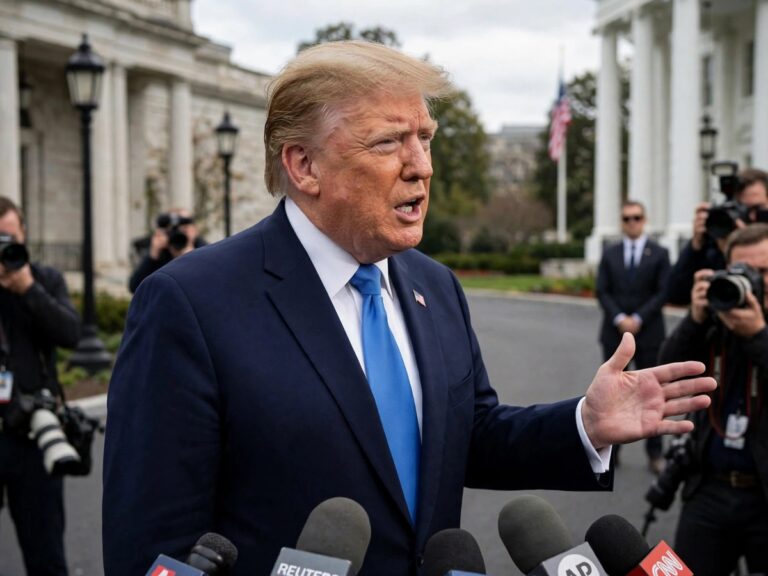
Donald Trump sold Nvidia stock, while a trust linked to Rep. Ro Khanna’s wife sold shares before a scandal involving Nvidia CEO Jensen Huang erupted. The fallout sent the company’s share price down about 26 percent and ended Huang’s tenure as CEO.
The Khanna-linked trust sold near Nvidia’s high, with disclosures showing two transactions on Sept. 4 and Oct. 7. Each was valued between $1,001 and $15,000. The Oct. 7 filing came one day after Nvidia reached its record closing price on Oct. 6.
That timing carries extra weight because Khanna, a California Democrat, has been one of Congress’ vocal supporters of banning lawmakers from trading individual stocks. Trade With Congress, a tracker operated by Altoneer, highlighted the transactions.
The scrutiny grew after reports about a relationship involving Huang and Alice Huang, a former executive at Singapore-based Megaspeed. U.S. intelligence officials suspect Alice Huang of working for China. Allegations say she collected intelligence for Beijing and helped route high-end Nvidia chips to Chinese users in alleged violation of U.S. export controls.
Khanna’s Office Rejects an Inside-Information Theory
Khanna’s office says inside information from his congressional work played no part in the sales. A spokesperson told The California Post that neither Khanna nor his staff received briefings about Megaspeed, Huang, or counterintelligence concerns connected to Nvidia. The office also said Khanna did not learn about the incident until a New York Times report.
Khanna has said he does not personally trade stocks and that neither he nor his family directly makes these decisions. According to the congressman, his household investments are held in a diversified trust created by his in-laws before his marriage. An independent third-party trustee manages the holdings.
His congressional assignments have made the timing more politically sensitive. Khanna sits on the House Select Committee on the Chinese Communist Party and is the ranking member of a House Armed Services subcommittee focused on cyber, innovative technologies, and information systems. He also belongs to the Taiwan Caucus and the High Tech Caucus.
Trump’s Sale Adds a Second Timing Question
Trump’s filing adds another high-profile transaction. He disclosed an Aug. 21 sale of up to $1 million in Nvidia stock, roughly two weeks before the Khanna-linked sale. Quiver Quantitative later reported that Nvidia shares had fallen 29 percent from that point.
White House spokesperson Davis Ingle said third-party financial institutions independently manage Trump’s portfolio and replicate recognized indexes, including the Schwab 1000. That explanation places the sale within a broader claim that outside financial managers, rather than Trump himself, direct the investments.
Khanna and Huang also appeared together at Stanford in April for a discussion about preserving American leadership in artificial intelligence and building the domestic technology workforce. The appearance does not establish a connection to the stock transactions, but it helps explain why the disclosures have drawn additional attention.
Why It Matters
The importance of these sales lies in the collision between ordinary portfolio management and public responsibility. A transaction can be independently handled while still creating an appearance problem when it involves a company tied to national security, advanced technology, and alleged activity connected to China. That tension is sharper for Khanna because he advocates a congressional trading ban and sits on panels dealing with China, cyber issues, and emerging technology. Trump’s sale raises a similar question about how much confidence the public can place in outside managers when a major political figure’s holdings move before damaging news becomes public.
The stakes extend beyond either politician. Nvidia faces scrutiny over its leadership and controls around sensitive chips, while lawmakers and the public are left to distinguish suspicious timing from proof of misconduct. The central unanswered issue is whether the sales reflected routine decisions by trustees and financial institutions, or whether anyone had information that should not have influenced a trade. The available disclosures and denials do not answer that question. They do show why transparent reporting and independent inquiries matter when markets, government service, and national security overlap.
The fallout has now prompted several investigations. Nvidia’s board has launched an independent review, the Justice Department is examining Megaspeed for possible export-control violations, and the FBI is looking into the alleged intelligence operation. Those inquiries will determine whether the unusual timing points to anything beyond independently managed trades.
Source: The Liberty Daily