
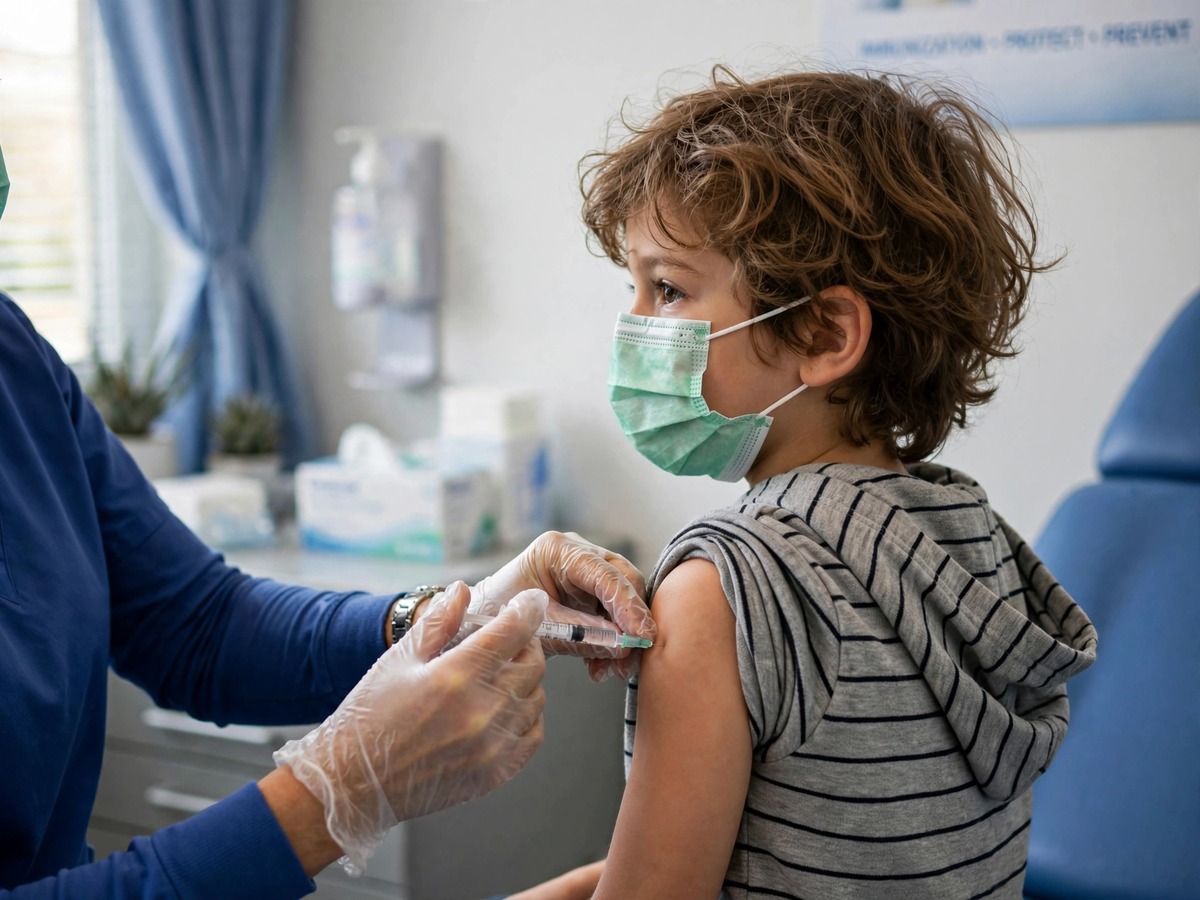
A newly posted analysis of U.S. health survey data reports that vaccinated children had higher adjusted odds of several health conditions than unvaccinated children, including autism, ADHD, anxiety and other neurodevelopmental outcomes.
The paper, titled Neurodevelopmental Outcomes in COVID-19-Vaccinated Versus Unvaccinated U.S. Children: Analysis of the National Health Interview Survey, 2022-2024, was published on Zenodo, an open-access research repository managed by CERN and OpenAIRE. The authors said they examined official National Health Interview Survey data involving 21,990 children.
Nicolas Hulscher, an epidemiologist and Foundation Administrator at the McCullough Foundation, said the analysis found a consistent association between childhood COVID-19 vaccination and higher odds of autism, ADHD, anxiety, special-education use and mental-health treatment. The survey provides health information about the U.S. civilian population.
The reported differences covered more than one diagnosis
According to the study, vaccinated children had a reported 32 percent higher rate of autism diagnoses and a 33 percent higher rate of ADHD. The analysis also identified a 23 percent increase in any neurodevelopmental disorder and a 19 percent rise in the use of special-education services.
The reported differences extended into physical and mental health. The study listed a 24 percent increase in asthma, a 27 percent increase in anxiety disorders, a 57 percent increase in mental-health medication use and a 60 percent increase in the use of mental-health therapy.
These figures describe associations reported by the analysis. They do not, by themselves, establish that vaccination caused any of the diagnoses, medications or services included in the study.
The strongest result involved younger children
Hulscher said the autism association remained after the researchers used multiple adjustment strategies and appeared stronger as the number of vaccine doses increased. The study also reported its largest estimate among some of the youngest children who had received multiple shots.
Among children ages five to seven, the analysis said that receiving three or more COVID-19 shots was associated with 154 percent higher adjusted odds of current autism. That is a subgroup finding based on the survey analysis, not proof that the shots caused autism.
The source article does not provide a biological explanation for the reported pattern. It presents the dose-related result as an important safety signal while relying on an analysis of existing survey data rather than a controlled experiment.
The authors are calling for an immediate policy change
Hulscher described the findings as a warning that should not be ignored and argued that COVID-19 vaccination for children should stop immediately. The Gateway Pundit article presents that position as a call to reassess current vaccination strategies and policies.
For parents and health-care providers, the central issue raised by the report is how to interpret the difference between an association and a demonstrated cause. The study reports higher rates across several outcomes, but the material provided does not establish that childhood COVID-19 vaccination produced those outcomes.
Source: The Gateway Pundit
