
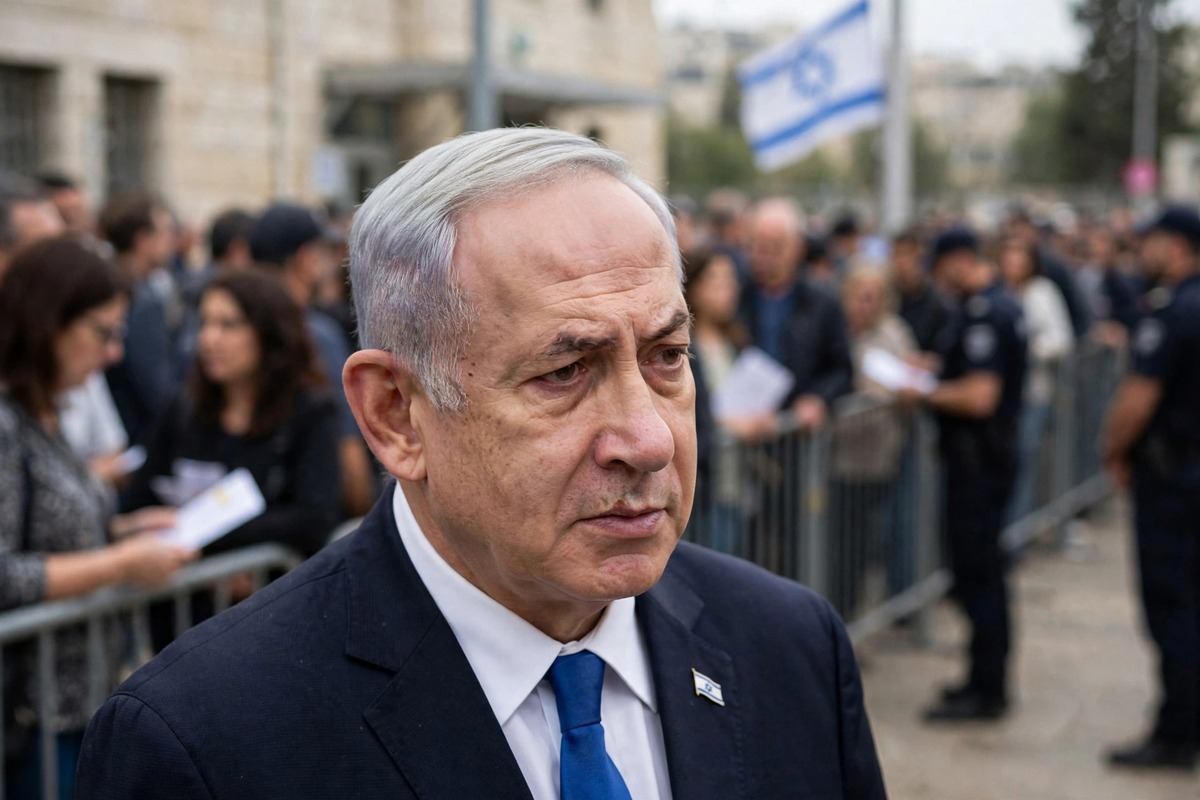
Early turnout in Israel’s legislative election reached 31.5 percent by noon, the highest level recorded at that point since 1973. The increase puts Benjamin Netanyahu’s political future under sharper scrutiny as Israelis choose the next Knesset.
The vote is the country’s first national legislative contest since the Hamas-led attack of October 7, 2023. War in Gaza continues, fighting connected to Lebanon is still simmering, and Netanyahu has warned that Iran could face renewed war. That makes the unusually active electorate important: it may reinforce the right or push support toward parties farther to either side.
Participation was 28.4 percent at the same point in the 2022 election. This time, the Central Elections Committee reported 31.5 percent, making the early showing the strongest for that stage since the election held after the Yom Kippur War.
Polling ran from 7 a.m. to 10 p.m. The contest included 7,331,981 eligible voters, 12,018 polling places and 36 lists competing for 120 Knesset seats. Shin Bet chief David Zini said authorities were monitoring the process and described the election’s conduct as proper.
Netanyahu, 77, has led Israel for nearly 19 of the past 30 years. His political identity is built around security. During his leadership, Israel has fought in Gaza, Lebanon and Syria, while also carrying out occasional strikes in Yemen. Iran has launched ballistic missiles and drones in earlier retaliation waves.
Opponents say Netanyahu could use the threat of renewed conflict to prolong his time in power. Against that backdrop, the early participation is being interpreted as Bibi fatigue. High turnout does not automatically favor one side, but it could send more voters toward parties farther right or farther left instead of preserving Netanyahu’s advantage.
Final polling points to a close contest between Netanyahu’s alliance of right-wing and ultra-Orthodox parties and the opposition led by Gadi Eisenkot’s Yashar. The opposition may have more routes to a majority, but internal divisions, especially over whether to work with Arab parties, could keep that advantage from becoming a governing coalition.
Israel’s system adds another layer. Voters do not select a prime minister directly. They choose party lists under proportional representation, with no local electoral districts dividing the country. After the ballots are counted, party leaders must assemble a coalition able to govern.
That process can fail even after voters have made their choices. If coalition talks collapse, the Knesset can be dissolved and another election called, a scenario Israel has faced after previous government breakdowns. Turnout may show how many Israelis participated without settling who can actually form a government.
Why It Matters
High participation changes the pressure around this contest even before the final count is known. It shows that the election has drawn unusual attention at a moment when security, war, and Netanyahu’s long tenure are all tied together. That energy could strengthen a clear mandate, deepen the challenge to his bloc, or make the eventual coalition math harder.
The people affected are not only Netanyahu and his opponents. Israeli voters are choosing the legislature that will shape the country’s response to Gaza, Lebanon, Syria, Yemen and Iran, while parties must decide whether they can cooperate across deep political and community divisions. The result therefore carries consequences beyond one leader’s personal standing.
The open question is whether a strong early showing becomes a governing majority or only a larger collection of competing blocs. Because voters select party lists rather than a prime minister, a winning night may still leave coalition talks unresolved. The election can reveal public preference without immediately settling who can govern, and that gap can lead to another vote.
Netanyahu and his wife, Sara, cast their ballots at a polling station in Jerusalem, and he urged Israelis to vote. In a separate video, he accused opponents of trying to steal the election, citing the arrest of three Ra’am operatives on suspicion of bribing voters.
Ra’am is a religious Arab Muslim party. The question of Arab voters as Israeli citizens also appeared in a post from Barak Ravid:
Mr. Ambassador, the Arabs who vote are Israelis…
— Barak Ravid (@BarakRavid) October 27, 2026
Source: The Liberty Daily

