Donald Trump brushed aside CNN’s attempt to turn Iran policy into a fight with JD Vance, saying Vance could hold his own view and that Trump would still choose to block Iran from getting a nuclear weapon even if he knew the decision could cost Republicans control of Congress.
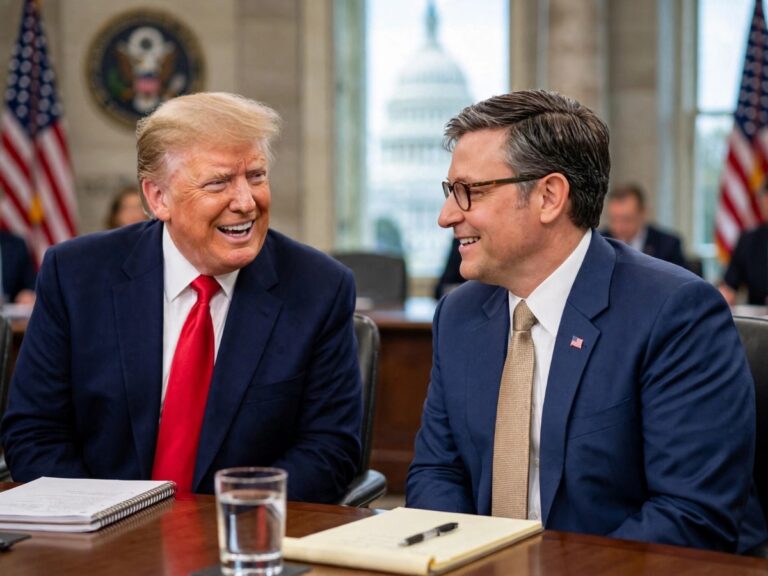
Trump made the point during a lengthy press conference with Vance and Secretary of State Marco Rubio as he recapped his Asia trip. The broad question-and-answer session ran for hours, and CNN’s Kaitlan Collins opened with a question about a Vance post arguing that the Iran war had hurt Republicans in the midterms.
Trump said the post did not trouble him. He acknowledged that the operation had raised prices, especially energy costs, and pointed to problems involving the Strait of Hormuz. But he separated the political consequences from the security objective, saying the possibility of Iran obtaining nuclear weapons would justify staying the course.
That answer refused the political wedge Collins appeared to be testing. Trump treated the vice president’s public opinion as permissible rather than evidence of a break inside the administration.
CNN’s Kaitlan Collins tried to drive a wedge between President Trump and VP Vance with this question.
Trump wasn't having it.
"No problem there at all. Actually, it was a very accurate statement […] People that work for me, they have a right to their opinion." pic.twitter.com/CgJNhwlrA7
— Townhall.com (@townhallcom) November 20, 2026
Reporters then challenged Trump over his description of Russian President Vladimir Putin as a friend. Trump defended the relationship, noting that Russia has at least 3,000 nuclear weapons and the United States has slightly more. His argument was that the president benefits from being able to communicate with leaders of powerful countries.
President Trump shuts down reporters taking issue with him calling Russian President Vladimir Putin a "friend."
"They have at least 3,000 nuclear weapons. We have more, by a little bit […] You're very lucky to have somebody that has a relationship with the heads of the most… pic.twitter.com/XzzawHtE9r
— Townhall.com (@townhallcom) November 20, 2026
Collins was also caught on a hot microphone complaining about the lighting before the briefing and remarking that the room belonged to the press, while accepting the arrangement.
CNN’s Kaitlan Collins was caught on a hot mic expressing frustration with the lighting before President Trump’s briefing, saying “it’s our briefing room but ok.” pic.twitter.com/xZfn7FWsiQ
— Breaking911 (@Breaking911) November 20, 2026
Luke Radel of MeidasTouch tried a different route, asking Trump whether Vance or Rubio would make the better president. Trump did not choose between them.
.@MeidasTouch's @LukeRadel asks Trump if he thinks JD Vance or Marco Rubio would be a better president.
Trump doesn't bite. pic.twitter.com/qPyp1SakBt
— Curtis Houck (@CurtisHouck) November 20, 2026
Radel also pressed Vance on whether supporting the Iran operation was worth the political damage Republicans could suffer. Vance defended the mission as necessary to stop Iran from obtaining a nuclear weapon. He argued that Iran, which he described as a major state sponsor of terrorism, could use such a weapon to kill large numbers of civilians. Vance added that Trump makes the decision, Trump had said he would make the same choice again, and his own job was to support the president.
Vice President JD Vance to @MeidasTouch's @LukeRadel on whether those who support the Iran war are content with losing the Senate for six years..
"What I said, the goal of keeping Iran from getting a nuclear weapon is absolutely what we need to be doing. It's the biggest state… pic.twitter.com/olk0d521KS
— Curtis Houck (@CurtisHouck) November 20, 2026
The policy defense also included a historical comparison to John Adams, who accepted political damage while trying to avoid a full-scale war with France during the Quasi-War. The argument was that elections can be won again, while a nuclear threat from Tehran could create a danger that changing congressional control would not solve.
Trump then offered a less combative development, saying he had a productive call with Texas Governor-elect Gina Hinojosa, a Democrat. He said Hinojosa wants a strong border, an issue the account linked to his two presidential victories. Possible immigration deals were raised, but nothing was settled.
Trump reveals he spoke with Democrat Texas Governor-elect Hinojosa pic.twitter.com/OXlow0uc7a
— Curtis Houck (@CurtisHouck) November 20, 2026
The final media clash involved NBC’s Monica Alba. Trump said NBC should be at the back of the room, and the account described him as unhappy with Alba.
Trump was NOT happy with NBC's Monica Alba pic.twitter.com/e7zlsD90rT
— Curtis Houck (@CurtisHouck) November 20, 2026
Why It Matters
The exchange matters because it placed electoral consequences and national security in direct conflict. Trump did not deny that the Iran operation could hurt Republicans or that it had economic effects. His position was that those costs must be weighed against the danger he associates with a nuclear-armed Iran. That leaves voters judging both the price of the policy and the risk its supporters say the policy is meant to prevent. Vance’s defense also shows how closely his political future is tied to the president’s decisions.
The briefing exposed a broader test for the administration: whether different public views can remain visible without becoming a split, and whether media questions can force Trump to separate himself from Vance or Rubio. The Texas conversation adds another unresolved path through border policy and possible immigration negotiations. The John Adams comparison frames the Iran choice as a willingness to absorb immediate political damage for a security goal, but it does not settle whether that trade will succeed politically or strategically. Those questions remain open while Trump continues to present relationships, control, and policy consistency as strengths.
Source: Townhall