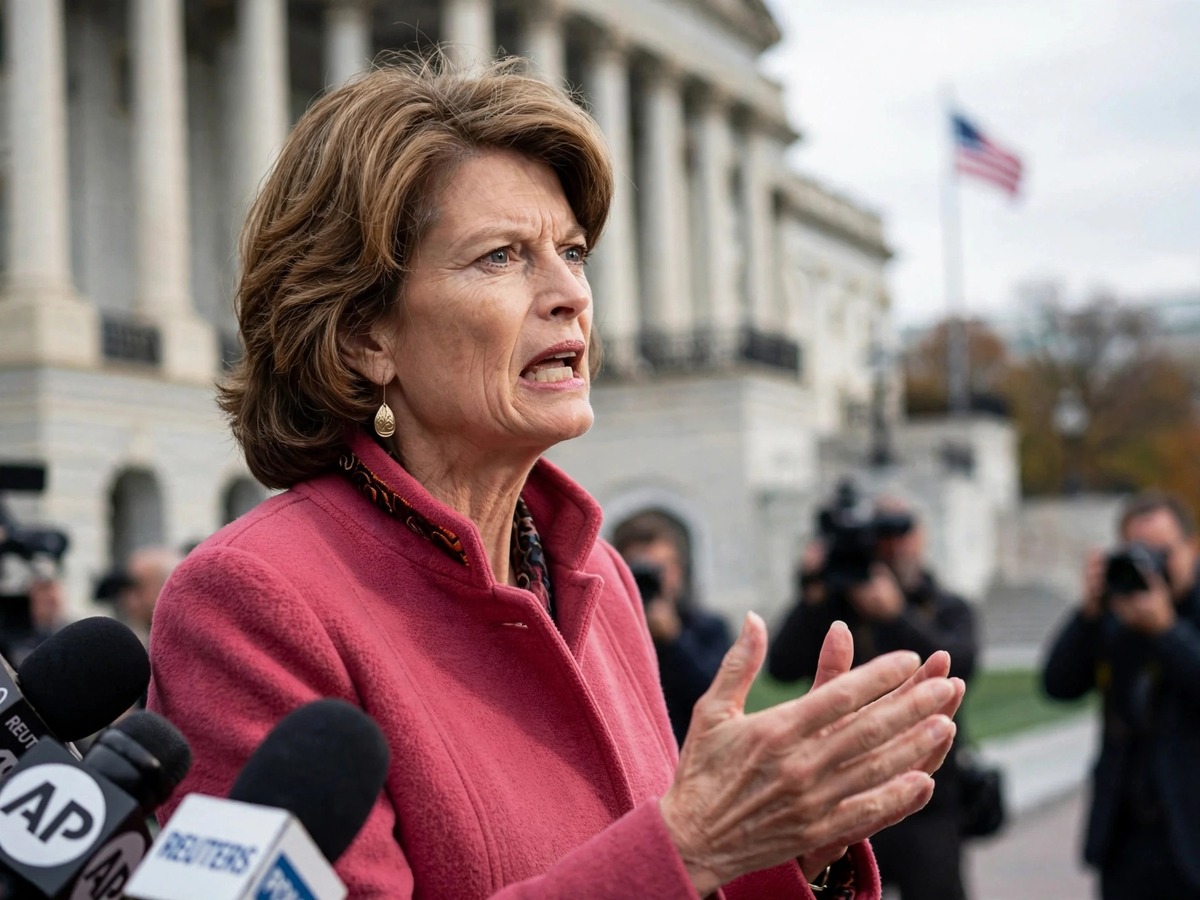
Lisa Murkowski, Alaska’s senior senator, is opposing the Justice Department’s challenge to the state’s Senate election, saying the case should never have been brought. Her position places a Republican senator against a federal effort focused on possible confusion between two candidates with the same surname.
The dispute centers on Daniel J. Sullivan. He entered the Republican primary, received 2.5% of the vote, and is now running in the general election as a no-party-affiliated candidate. Incumbent Senator Dan S. Sullivan is also on the ballot. The Justice Department says voters supporting the incumbent could accidentally select Daniel instead, a concern that could carry through Alaska’s ranked-choice process.
The lawsuit asks for a specific remedy. It seeks to stop certification if Dan S. Sullivan loses and if treating every vote for Daniel as a vote for the incumbent would have changed the ranked-choice outcome in Dan S. Sullivan’s favor. The source says the alleged confusion could help Democrat Mary Peltola, raising the stakes of the candidate-name dispute.
Murkowski rejects that reasoning. She says Alaska has already distinguished the candidates on the ballot and that voters do not need outside help choosing their preferred candidates. Her statement ended with a blunt assessment: “The Department of Justice should never have filed this lawsuit.”
Her opposition places her on the Democratic side of the legal fight, which the source says is represented by Marc Elias’s Elias Law Group. The article characterizes Daniel’s candidacy as a Democratic decoy intended to confuse voters. The DOJ filing uses narrower language, saying some voters could choose him unintentionally.
That creates the core conflict: Murkowski is relying on the ballot’s labels and voters’ ability to distinguish the candidates, while DOJ wants the court to examine whether similar names affected voter intent. The requested remedy would connect that question to the certified result instead of treating the ballot design issue as separate from the vote count.
The report also includes a video and Murkowski’s public statement:
Alaskans don’t need any help voting for their preferred candidates, and the State of Alaska has already handled this by clearly distinguishing the candidates on this year’s ballot. The Department of Justice should never have filed this lawsuit.https://t.co/88tGvV0P8O
— Sen. Lisa Murkowski (@lisamurkowski) October 24, 2026
Why It Matters
This fight matters because it asks whether a candidate’s name can affect the legal treatment of an election result even when the ballot lists the candidates separately. The immediate stakes are certification of the Alaska Senate race and the voters whose choices could be interpreted differently if a court accepts the confusion argument. Murkowski’s opposition also shows that the dispute is not limited to the Justice Department and the Democratic legal team. It has become a visible disagreement among the political forces involved in the race and the federal response to it.
Different approaches to protecting the vote are colliding. Murkowski relies on the state’s labeling of the candidates and on voters’ ability to select their preferred choice. The lawsuit focuses on the possibility that similar names could produce unintended selections, then asks the court to measure that possibility against the ranked-choice result. That makes the case larger than a dispute over a particular campaign. It is also a disagreement about whether election safeguards should focus on ballot design, voter intent, or both.
The unresolved questions are practical. Will a court accept that confusion could have affected the result? Would the disputed ballots change the outcome under Alaska’s process? And if the conditions in the filing are met, would certification be blocked as the department requests? Those questions affect the candidates, voters, state election authorities, and anyone relying on the certified result. Until they are answered, the race remains tied to both the count and the meaning of the choices behind it.
The president has also defended the lawsuit, telling reporters, “I’m the one that said do it.” That gives the filing direct presidential backing, even as Murkowski says it should never have been brought. The court’s decision on voter confusion and the lawsuit’s conditions will determine whether the challenge can affect certification.
Source: The Gateway Pundit