
Ceuta’s reported sexual assaults rose 650 percent after a late-July migrant surge overwhelmed the Spanish enclave, according to figures cited by Twitchy.
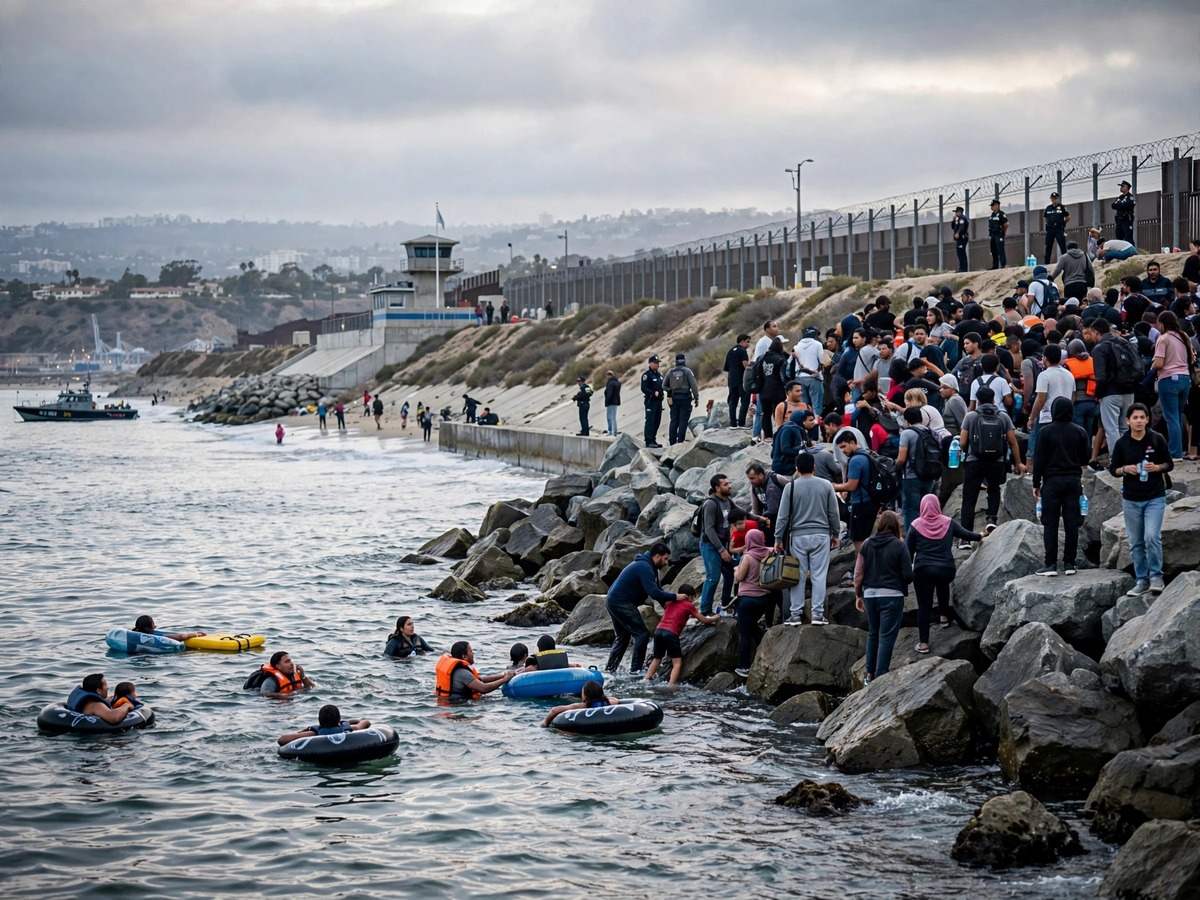
The border episode was described in a Visegrád 24 post as a large arrival of Moroccan and Algerian migrants. It said more than 1,500 people, including adults and minors, had reached Ceuta by sea in recent days, while hundreds crossed the border fence. Reception and juvenile centers were reportedly full, prompting Ceuta’s government to seek a national emergency declaration and military support from Spain.
BREAKING:
🇪🇸 An “absolute migratory emergency” has been declared in Spain's enclave of Ceuta after a massive surge of illegal migrants.
Hundreds of Moroccan and Algerian migrants who flooded the Spanish enclave yesterday breached the border fence today without control.
In… pic.twitter.com/nrfH8YywlE
— Visegrád 24 (@visegrad24) July 30, 2026
Records from emergency services, obtained by Spanish outlet El Español and described in a Daily Mail report, show four sexual-assault cases from July 30 through October 29 in 2025 versus thirty in the matching 2026 window. Sixteen of the later cases involved minors, while the earlier comparison recorded none. The report describes that change as a 650 percent increase.
Ceuta sex crimes have risen 650% since migrant influx on the Spanish territory – with most of the attacks on children https://t.co/SpWV78BSMf
— Daily Mail (@DailyMail) November 19, 2026
That was only one part of a much broader change. Firearm-assault reports rose from eight to fifty-six, and incidents involving bladed weapons climbed from twenty-three to 268. Home invasions increased from thirty-five to 1,018. Street robberies involving violence or intimidation went from eleven to 115.
Other categories also surged. Public-order disturbances moved from eighty-five to 618. Reports involving abandoned minors grew from fifteen to 265, while the broad category of aggressions reached 1,777, compared with 209 in the earlier period. Across all listed emergency incidents, authorities recorded 11,286 cases in 2026, compared with 2,233 in 2025.
The supplied material also cites a separate account that put the influx at 80,000 entries over several days, while saying most later left. It gives both that figure and the smaller sea-arrival count without explaining the difference, so the numbers should not be treated as interchangeable. The consistent point is that local services were overwhelmed, many people remained, and tension with residents followed.
The commentary then raised a territorial concern. Ceuta is a Spanish enclave disputed by Morocco, and it suggested that some arrivals might have been part of a long-term effort to change control of the territory. The supplied evidence does not prove that motive, making it a political interpretation rather than an established fact.
Its policy argument was that immigration should be controlled, with a strong emphasis on assimilation and removing people who cannot follow the rules. The commentary rejected a racial or genetic explanation for crime, but argued that cultural differences matter when governments decide how migration should be managed. That broader claim goes beyond what the emergency records themselves can establish.
You don't say?
— Not the Bee (@Not_the_Bee) November 19, 2026
Hang on. I was told all cultures were equal…🤔
Another massive lie told by the left.
— Beau Nash (@BeauNash1674) November 19, 2026
Sex crimes up 650% and most of the victims are kids? Any country that won't lock up the men doing this and send them packing has stopped protecting its own children and there’s a special place in hell for these people.
— PamelaG (@PamelaUSofA) November 19, 2026
Those who facilitate these invasions are the “pedophile protectors” the left likes to talk about
— Tara (@Tara4America) November 19, 2026
I did try to warn you …https://t.co/dDTi2lUPwQ
— Rare | ♻️🇬🇧 (@RareRestore) November 19, 2026
Where are the NGO's now?
Save the Children, Unicef?
Human Rights Watch, Red Cross?Ohh, that's right..they feed perps.
— ✨XEster✨ (@WitchedWicca) November 19, 2026
https://t.co/o94shnq9fs pic.twitter.com/WfV24uUFLd
— Perturabo, Lord of Iron (@RedeemerOfNod) November 19, 2026
When Europeans snap it's going to be so bloody. https://t.co/g5josGroWa
— Gealach Teannasach (@SgarlaidAingeal) November 20, 2026
🇪🇸 Ceutan woman is outraged over the total chaos and unsafety in the city: "my children don’t go to school"
“I don’t go out at night. I want to go home alone and drunk, Irene Montero (far-left MP). Why can’t I? My children don’t go to school. They don’t go because I am afraid,… pic.twitter.com/vmt1bG11sX
— Visegrád 24 (@visegrad24) September 9, 2026
Why It Matters
The importance of these figures is not that they prove a group-wide explanation for crime. They show how quickly a border crisis can become a public-safety crisis when local reception, youth services, policing, and emergency systems are stretched beyond capacity. Residents and vulnerable migrants can both suffer, while children are especially exposed when services are full and public order weakens.
The wider policy question is whether a government can manage sudden arrivals without losing control of its borders or its responsibility to protect people already living in the enclave. The supplied account points toward enforcement, integration, and accountability, but it leaves open how much of the increase reflects the arrival itself, reporting practices, or other local conditions.
That uncertainty should not erase the victims or the public-safety problem described by the records. Any response must address the reported assaults, weapons incidents, home invasions, disorder, and abandoned minors while testing the claims about motive and culture against stronger evidence. Ceuta’s residents are left with the immediate question of how order will be restored and future arrivals handled.
Source: twitchy.com