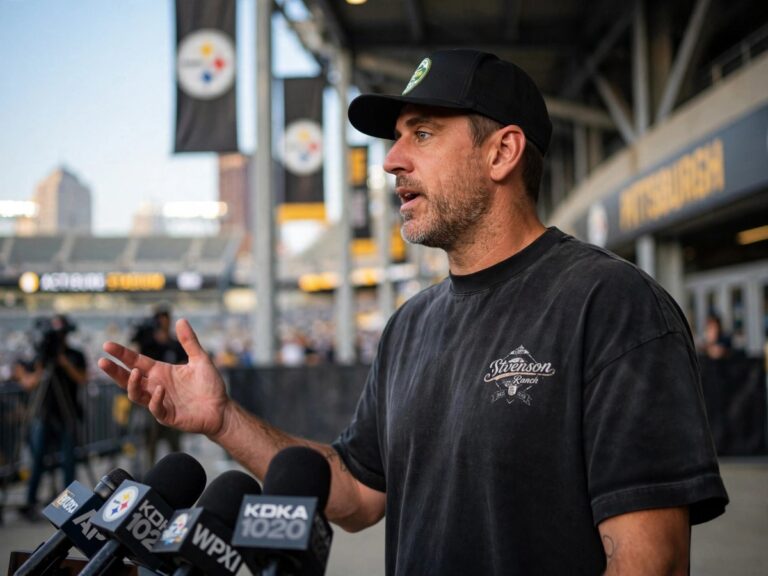
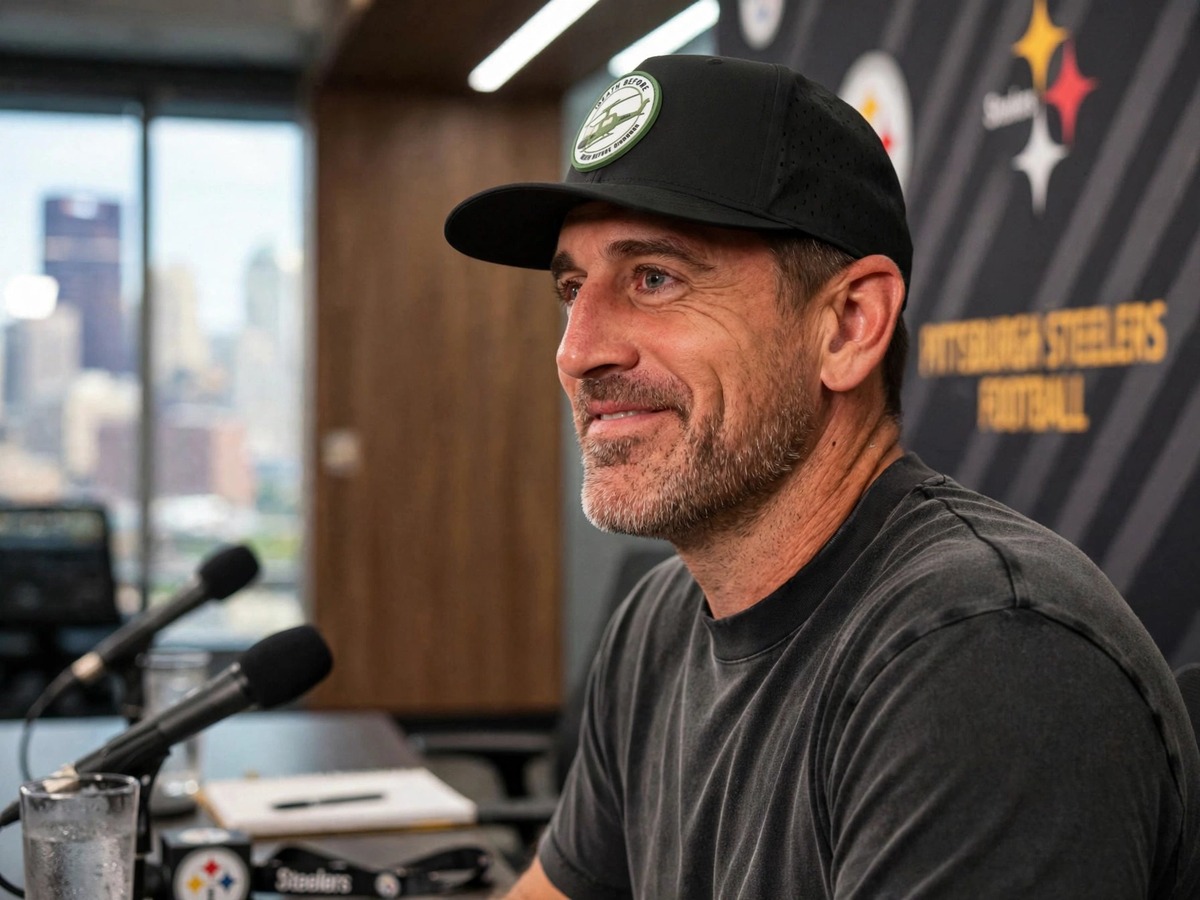
Aaron Rodgers’ account of his benching has turned Mike McCarthy’s Steelers crisis into a public-relations nightmare and a cautionary tale for Republicans.
The trouble began after McCarthy had publicly indicated that Rodgers would remain Pittsburgh’s starting quarterback. Soon afterward, the team announced that Rodgers was healthy but would not dress for its game against Denver. Mason Rudolph would start instead.
Rodgers said he did not learn that decision from his coaches. He said Pat Freiermuth told him, despite Rodgers having several conversations with McCarthy during the previous week. That created an immediate credibility problem: how could the quarterback be reassured about his position while the team was preparing to remove him from the lineup?
Rodgers took the dispute to The Pat McAfee Show and expanded the story beyond a personnel decision. He alleged that McCarthy had fallen asleep during meetings, missed team walkthroughs, and failed to watch film. Rodgers also said McCarthy ended a locker-room moment by calling out, “1-2-3 Packers.” He described the working environment as unhealthy.
The accusations landed because Rodgers reportedly delivered them in a calm, detailed way. The account says the allegations had not been discredited. That made it harder to dismiss the interview as a frustrated player attacking a coach after losing his job.
It also changed the story from a quarterback controversy into a question about leadership. The article argues that McCarthy’s reputation may now require an extraordinary turnaround, potentially a Super Bowl run, to recover. Every visible mistake can be interpreted through the new narrative, while previous jokes, comments, and press appearances are being examined for clues that were overlooked before.
The public-relations lesson is the same one the author applies to the Republican Party: offense and defense both matter. A carefully delivered attack can define a story, but a slow or incomplete response can leave the target trapped on defense. One way to fight back would have been to immediately challenge a specific allegation and force attention onto a disputed detail. Without that kind of response, the original charge can become the frame for everything that follows.
This soundbite always felt bigger than it was at the time. Cushioned as a joke…foreshadowing.
Ed Werder asks Mike McCarthy about him saying he watched all the film from 2019 before the hire in Dallas…the answer pic.twitter.com/Z3Quj4XDwt
— Jane Slater (@SlaterNFL) November 25, 2026
Comedian Shane Gillis gives just a 17-word response after his ex-girlfriend wrote an over 3000 word essay about how she was a victim in their relationship.
At one point in the piece, Grace Brassel complained that she felt she was expected to cook, clean, and do laundry.
In… pic.twitter.com/ZDbQY2Zwos
— Collin Rugg (@CollinRugg) November 25, 2026
Why It Matters
This matters because the dispute shows how quickly a single event can become a broader judgment about competence. McCarthy is no longer being evaluated only on his lineup choices or game results. Rodgers’ allegations have created a story about preparation, honesty, and control inside the team. That affects the coach, the quarterback, the Steelers organization, and everyone trying to explain what happened to the public.
The larger political point is that communication is not merely decoration added after decisions are made. The source argues that messaging can shape whether people accept a policy, believe a leader, or punish a party at the ballot box. The open question is whether McCarthy can answer the allegations with enough clarity to change the narrative, or whether each future mistake will reinforce the version Rodgers put into circulation.
Source: pjmedia.com