
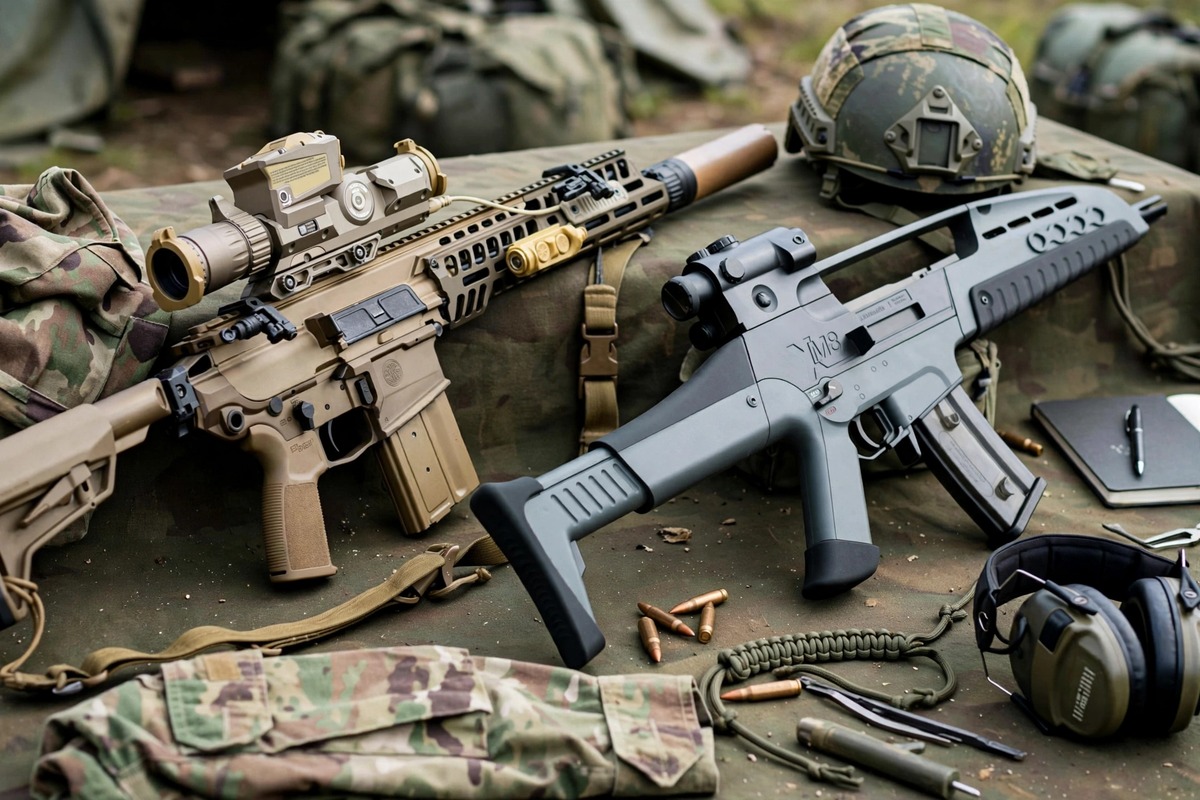
The Army is moving to replace its criticized M7 rifle with the lighter M8 carbine, also identified as the XM8.
Reports put the handoff on different clocks. One says the M7-to-M8 change starts in December. Separately, a Defense Department spokesperson told the Daily Caller News Foundation that the XM8 would begin replacing the M4A1 in the Close Combat Force in FY27.
The shift follows online complaints about the M7. Critics have pointed to its weight, complicated add-ons, reliance on special ammunition from a single supplier, and alleged fragility under stress. That criticism is striking because the rifle came from a program designed to improve performance at longer ranges.
Besides weighing 50% more than an M4, this POS is heavily overloaded with janky tacticool features, takes special ammo produced by one monopoly supplier, and falls to pieces under stress. All it lacks to be a true exemplar of American tech is a QR code and frozen touch screen. https://t.co/kt2qmRwJH7 pic.twitter.com/zJKfaWg9SA
— Seth Harp (@sethharpesq) October 8, 2026
SIG won a ten-year contract in 2022 to produce the Army’s Next-Generation Squad Weapons, a rifle and light machine gun built around a new 6.8x51mm cartridge. The effort followed the Army’s 2017 Small Arms Ammunition Configuration study, which identified a need for more force against targets and technology that could reduce shooter mistakes.
The effort was meant to overcome shortcomings in the Army’s existing 5.56 mm and 7.62 mm weapons when troops face targets, whether protected or not, at long range. The Army has described it as its first large-scale rifle and automatic-weapon rollout of this kind in about 65 years.
Fitted with a suppressor, the M7 comes in at 9.8 pounds. It uses a 20-round magazine, has a 13.5-inch barrel, and can accept an optical sight. Those specifications help explain why weight became the most visible point of criticism.
Army figures put the XM8 at 8.8 pounds with a suppressor, along with a 25-round clip and an 11-inch barrel. The Defense Department spokesperson said the carbine is about 3.5 inches shorter and more than a pound lighter than the M7, presenting it as a direct response to the burden complaints.
The weapons package also contains an M250, meant to take the M249’s squad automatic weapon role in front-line infantry units. The M7’s planned role was to take over from the M4 carbine, a shorter version of the M16, whose first fielding dates to the 1960s. The M4, in turn, displaced the M3 submachine gun, a World War II-era weapon known as the “grease gun” and chambered for .45 ACP.
Why It Matters
The dispute is about more than a number on a scale. A weapon designed to deliver greater energy and help shooters make fewer errors still has to be carried, loaded, maintained, and used under pressure. That creates a direct tradeoff between the Army’s performance goals and the burden soldiers experience. The M7 criticism matters because it challenges whether the added capability arrives in a package troops can realistically manage.
The people most affected are soldiers in close-combat formations, who would live with the rifle’s weight, magazine capacity, barrel length, suppressor, optics, and ammunition requirements. The decision also sits inside a larger replacement effort rather than standing alone: the XM8 is linked to the M4A1 transition, while the M250 is aimed at the squad automatic weapon role. In that context, a change to one weapon can shape how units equip and support the next generation of small arms.
The unresolved issue is whether the lighter carbine can answer the most visible complaint without giving up the reach and target effect that drove the NGSW program. The material provided does not offer a battlefield verdict on the XM8, and it presents different timing references for the transition. That leaves two practical questions: how the replacement will perform for soldiers and how the Army will sequence the change.
The immediate change is clear: the Army is pairing its NGSW goals with a lighter, shorter carbine after criticism of the M7’s burden. The XM8 is the service’s stated response, while its exact rollout sequence and battlefield results remain unresolved.
Source: The Liberty Daily