
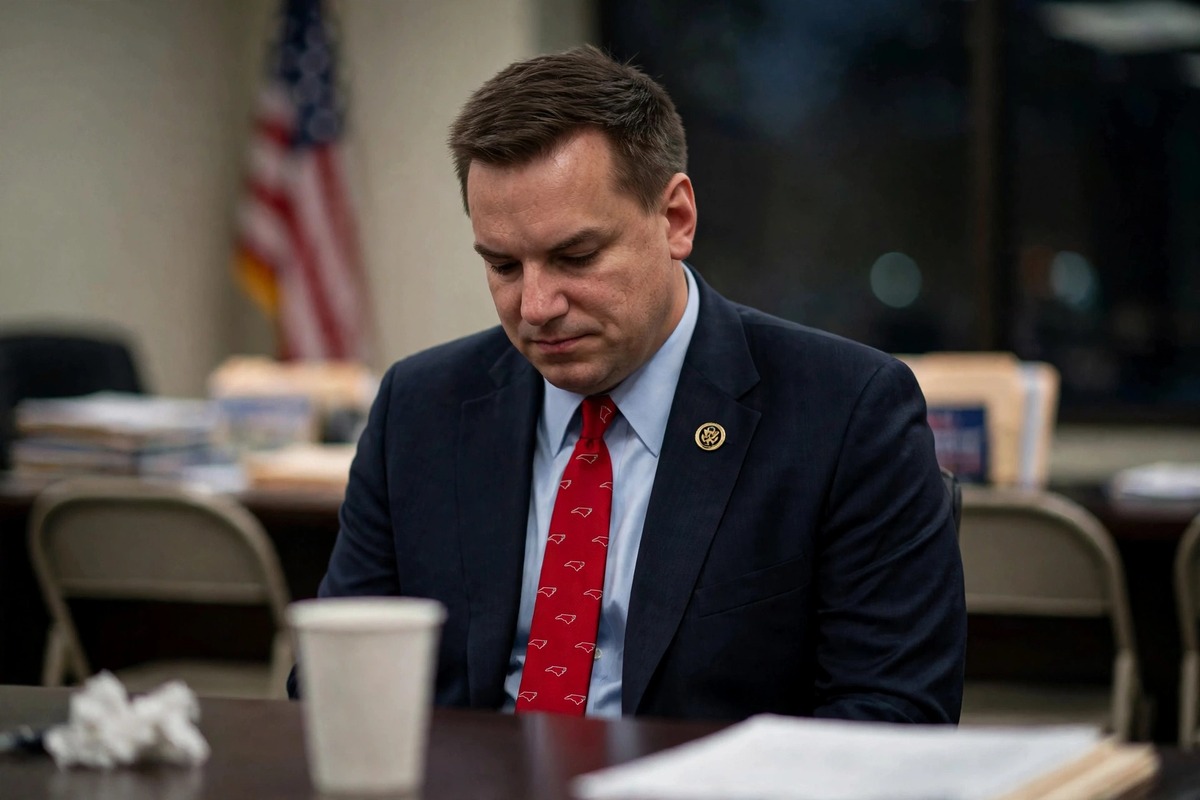
Rep. Richard Hudson, the House GOP’s campaign chief, lost his reelection bid in a North Carolina district Donald Trump carried by 16 points in 2024.
Democrat Richard Ojeda won North Carolina’s Ninth District, turning an expected Republican hold into a major upset. With 99% of ballots counted, Ojeda held 51.1% to Hudson’s 48.9%, based on figures from NBC News and Decision Desk HQ.
Before Election Day, Cook Political Report had placed the contest in its “Likely R” category. That forecast made the defeat especially significant, coming as Republicans also lost races elsewhere around the country.
Hudson has led the National Republican Congressional Committee since January 2023. The NRCC works to elect Republicans to the House through candidate funding, turnout operations, and other campaign support. Hudson has represented North Carolina in Congress since 2013.
The result carried an unusual political sting. The official responsible for helping Republican candidates win House seats could not hold his own seat. That made Hudson’s loss more than a personal setback for a longtime lawmaker.
Ojeda was not viewed as an obvious favorite. The U.S. Army veteran served one term in West Virginia’s Senate between 2017 and 2019, later lost a House race there, and briefly entered the crowded Democratic presidential primary in 2020. He moved to North Carolina that year.
His recent political activity included serving as a keynote speaker at a “No Kings” rally in Fayetteville in March 2026. His victory came on the same night Democrats flipped North Carolina’s U.S. Senate seat. Former two-term Democratic Gov. Roy Cooper easily defeated Republican nominee Michael Whatley for the seat being vacated by retiring Republican Sen. Thom Tillis.
North Carolina’s legislature had also redrawn the state’s House districts in an effort to create one additional Republican seat. That move formed a striking backdrop to Hudson’s defeat: even with a map intended to help the GOP, the NRCC chair lost in a district viewed as safely Republican.
Why It Matters
Hudson’s defeat matters because it changes a routine reelection expectation into a test of the Republican Party’s campaign structure. The NRCC is built to connect candidate support, fundraising, turnout work, and other campaign help to House races. When its chair loses in a district that strongly favored Donald Trump, the party’s ability to protect its own leaders and correctly read the electorate comes under a harsher spotlight. The personal consequence is clear, but the meaning reaches beyond Hudson: candidates, donors, and party officials must now absorb a result that ran against the pre-election assessment.
The North Carolina context makes the result harder to treat as an isolated upset. Ojeda’s win arrived beside a Democratic Senate pickup, while Republican lawmakers had redrawn the House map to seek another GOP seat. Those facts point to a broader challenge for the state’s Republicans, even though they do not reveal what issue or combination of voters decided Hudson’s race. The next questions are practical rather than abstract: whether the party changes its campaign strategy, how it handles the loss of its national House campaign leader, and whether the district’s political direction has truly moved away from its earlier Republican advantage.
The contradiction is difficult to miss: a map drawn to add a Republican seat did not prevent the NRCC chair from losing in a district Trump had carried decisively. Ojeda, who entered as the heavy underdog, now holds the upset victory, while Hudson’s defeat stands as the clearest symbol of that night’s Republican losses in North Carolina.
Source: The Liberty Daily
