
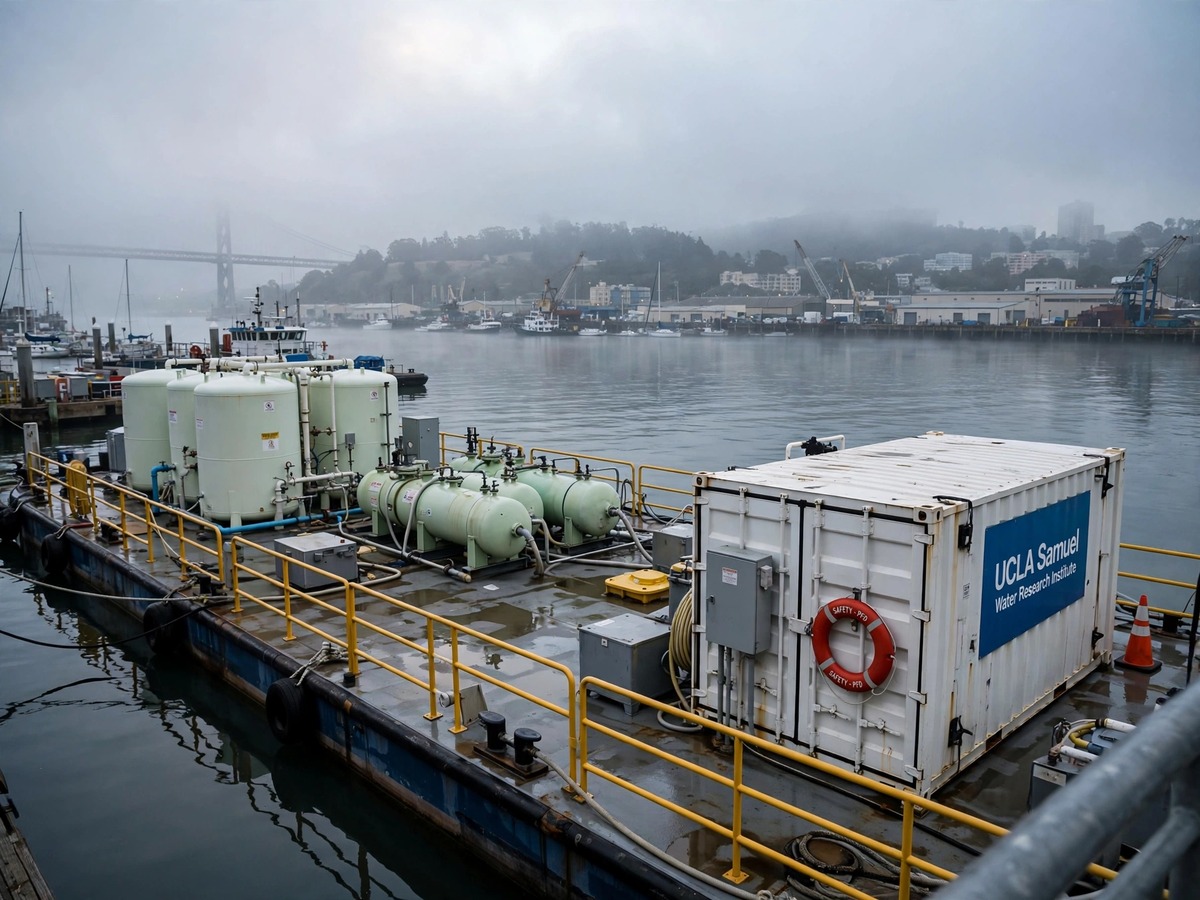
A California emissions-control barge suffered a dramatic equipment collapse at the Port of Hueneme, sending its massive snorkel onto a dock and a Japanese vehicle carrier in an accident that could have seriously injured or killed workers.
A statement from the Port Operators Group, issued October 5, said the incident happened Monday morning. Video obtained by Breitbart News shows the green barge’s snorkel collapsing onto the deck of the Pleiades Leader, a Japanese automobile carrier operated by NYK Line.
No injuries were reported. But the machinery fell from a height where anyone working on the deck could have suffered fatal injuries, turning a near miss into a much worse event. The accident also raises a larger question: why has this type of barge become so important to California port compliance?
Officials Still Have to Explain the Failure
Port officials said the cause was still being investigated. The collapse also released a small amount of hydraulic fluid. Officials determined that a spill response was unnecessary, saw no visible sheen or continuing leak, and said STAX and port authorities would keep assessing possible environmental effects.
STAX Engineering, the California company behind the patented system, says its barge captures vessel exhaust and filters emissions to help ships meet the state’s strict standards. The equipment draws exhaust from docked vessels and is intended to remove most particulate matter, nitric oxide, and nitrogen dioxide.
Those standards carry a steep threat for operators. Under CARB Title 17, CCR Section 93130, commercial vessels at California ports can face penalties of up to $50,000 per day for noncompliance. That financial pressure helps explain why emissions-capture equipment is being used as a central compliance tool.
The Port Accident Connects to a Much Bigger Cost Fight
The report also cites a June analysis arguing that Gov. Gavin Newsom’s energy policy reaches far beyond California. Shipping companies may respond by retrofitting vessels, paying fines, or routing around the standards. Those expenses can move into freight rates, wholesale costs, and the prices customers see in stores.
Why It Matters
This accident puts a human safety question at the center of a policy debate usually framed around emissions targets, penalties, and prices. A dockside system may help ships meet California requirements, but the collapse shows that compliance equipment is also heavy industrial machinery operating around workers, docks, and vessels. When that machinery fails, the consequences are not limited to paperwork or a higher operating bill. They can reach people on a deck and the port’s surrounding environment.
It also shows why CARB’s reach matters beyond California. Shipping companies facing strict rules have choices that carry costs: install equipment, absorb penalties, or change routes. Those decisions can affect freight and, in turn, the prices paid by businesses and consumers elsewhere. The unresolved issues are equally important: investigators still must determine why the snorkel fell, while officials continue reviewing the hydraulic-fluid release and possible environmental impact. Until those questions are answered, the incident remains both a safety warning and a test of whether California’s compliance approach can work reliably at ports.
The Financial Impact Remains Unsettled
The cited analysis says California has collected tens of millions of dollars from ships without required technology since 2025. CARB estimated the rules could cost about $2.23 billion by 2032 and described that figure as reasonable. Critics argue the expense will not stay with California or the shipping companies, but will spread through the national supply chain.
At Hueneme, the immediate result is clearer: nobody was reported injured, the hydraulic-fluid release was judged small, and the barge meant to help a vessel meet emissions requirements became the focus of a serious safety and environmental review.
Source: breitbart.com
